
How Proper Supply Co. Started: Golf, Design School, Italy
I'm a product designer by trade. Which means when an idea for something shows up in my head, the first places I go isn't what it looks like. It's how it works and what it's made of.
What are the materials going to be? What does it feel like in your hand? What is it going to look like in a month, in a year, in ten years?
That last one is the question most products can't survive.
I've been playing golf for over twenty years. For most of them I'd look at what was in the pro shop, and then at what was in my own bag, and think the same thing every time. There are two options here. Cheap and disposable products, or expensive and loud gear. There weren’t properly made goods, that let the materials and craftsmanship shine. It was one or the other and neither worked for me.
That bothered me for a lot longer than it should have before I did anything about it.
Italian influence
The real start is design school in Italy.
I spent that time around leather artisans who had been doing the same work for decades, and it reset what I thought "good" meant. Not raised it. Reset it. There was no acceptable. There was no close enough. There was right, and then there was everything else, and the gap between them wasn't up for discussion.
I brought that home and never got rid of it. Honestly, I've tried. It makes buying anything a chore.
For years that new concept just sat there while I did design work and played golf. Leather craft was the thing I picked up to stay creative and learn something new with my hands. Somewhere in there it stopped being the thing I did on the side. It became something more, something that I couldn’t put down and I knew it was here to stay. That changed things.
What I make
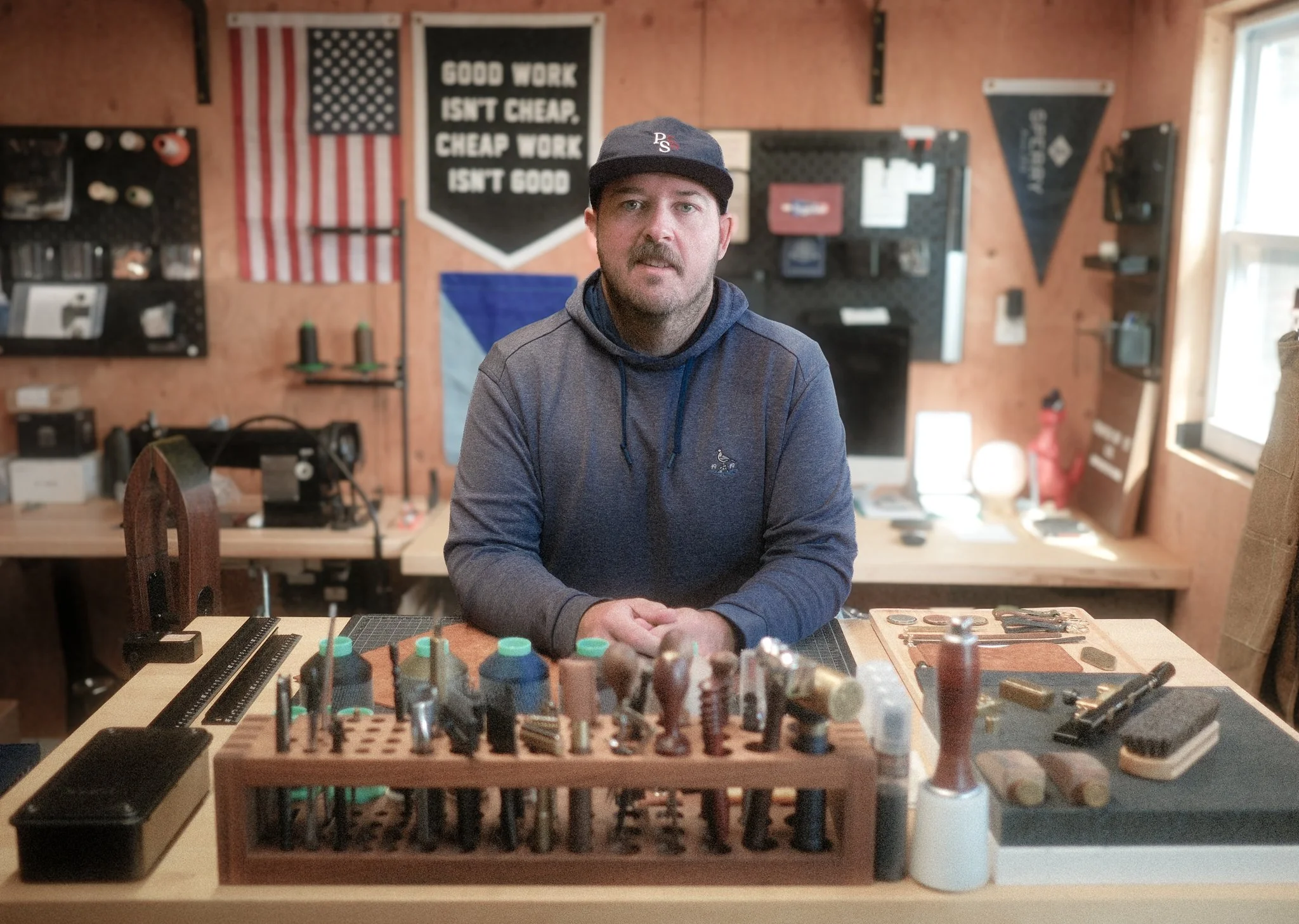
Every leather good that is sold in the shop is cut, stitched, and finished by hand. By me. In Scituate, Massachusetts.
The leather comes from Badalassi Carlo, a tannery in Tuscany. Full-grain, vegetable-tanned, which means tree tannins and time instead of chemicals and speed. It costs more and it takes longer, and I'll write a whole note about why I think that's worth it later.
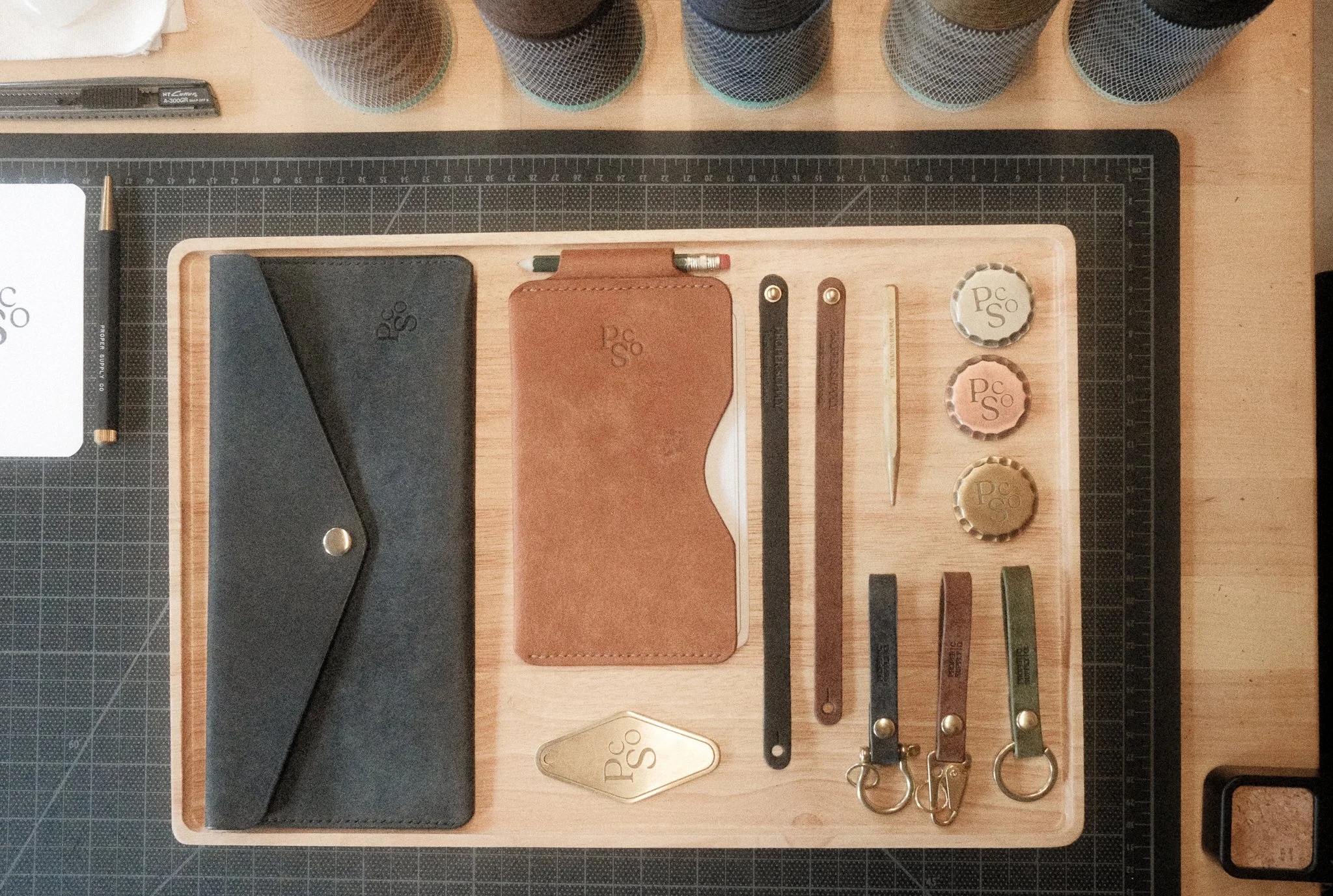
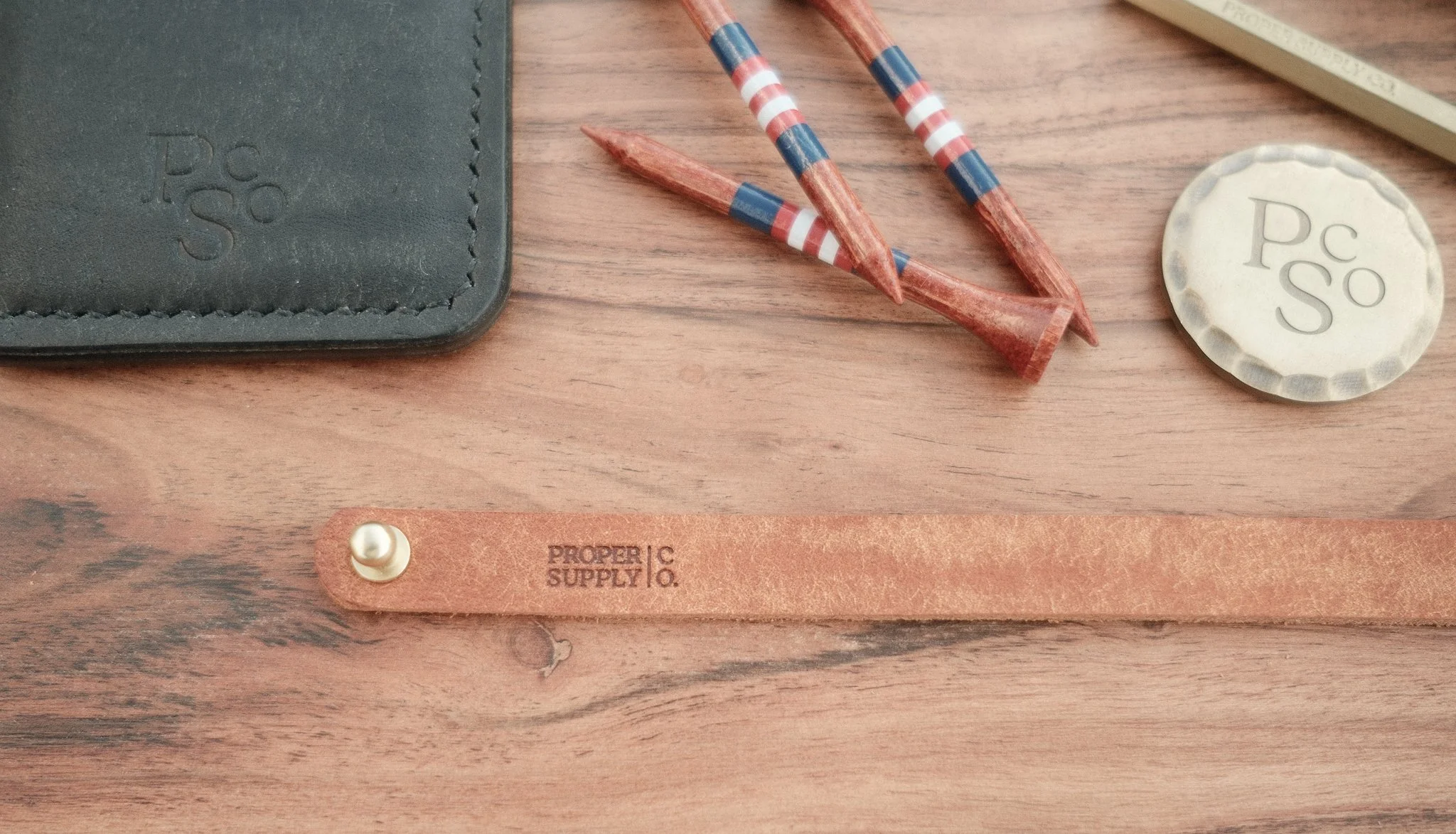
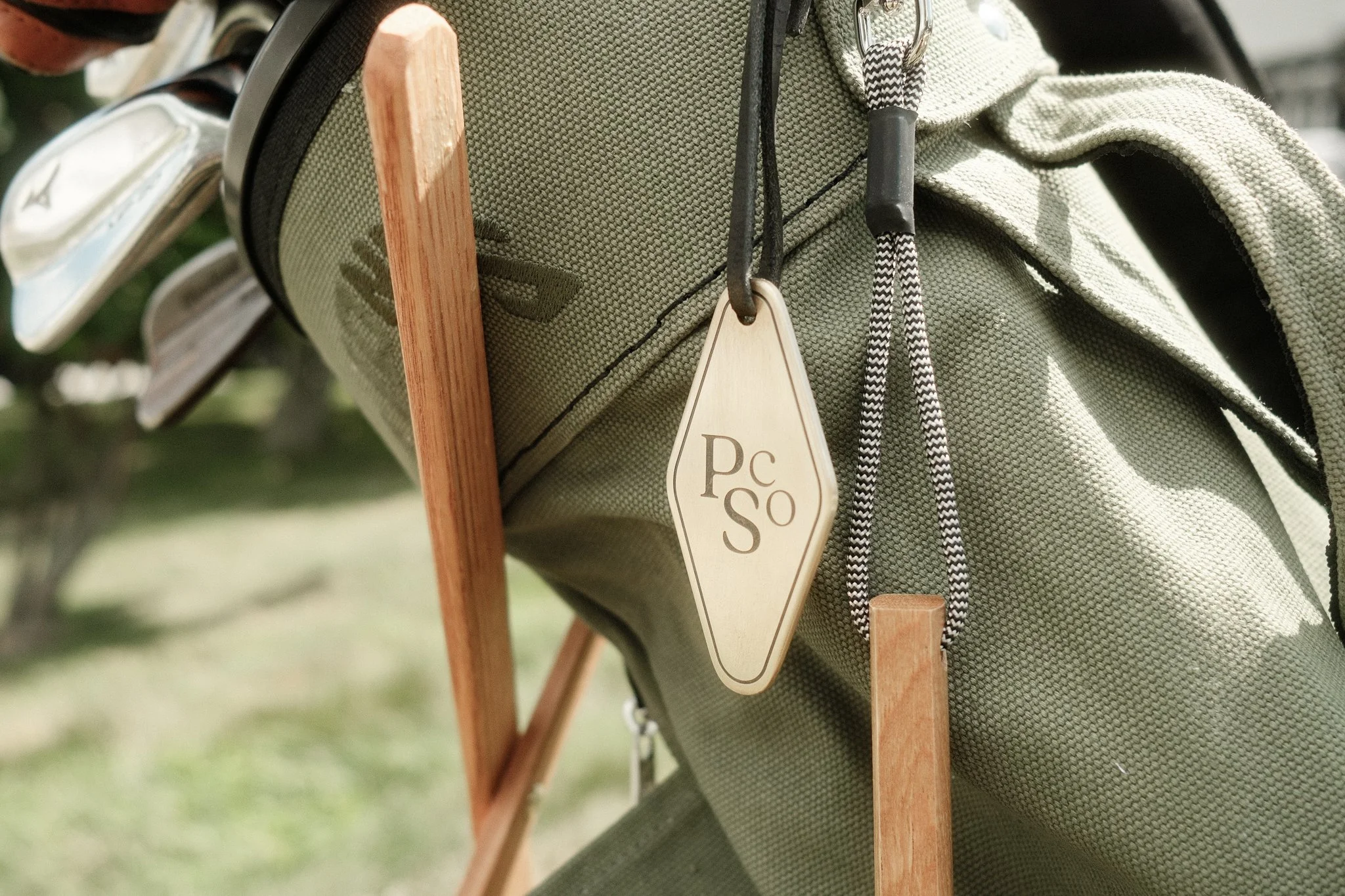
The hardware is solid brass. Not plated. Plated hardware eventually wears through and shows you what's underneath, and what's underneath is never as good as what was on top.
The stitching is done by hand, two needles and one thread, no machine. A machine stitch is a chain, so if it breaks in one place it can run the whole seam. A hand stitch locks two threads in every hole. A break stays a break. It takes considerably longer and it's most of the reason a piece costs what it costs.
The part I care about most
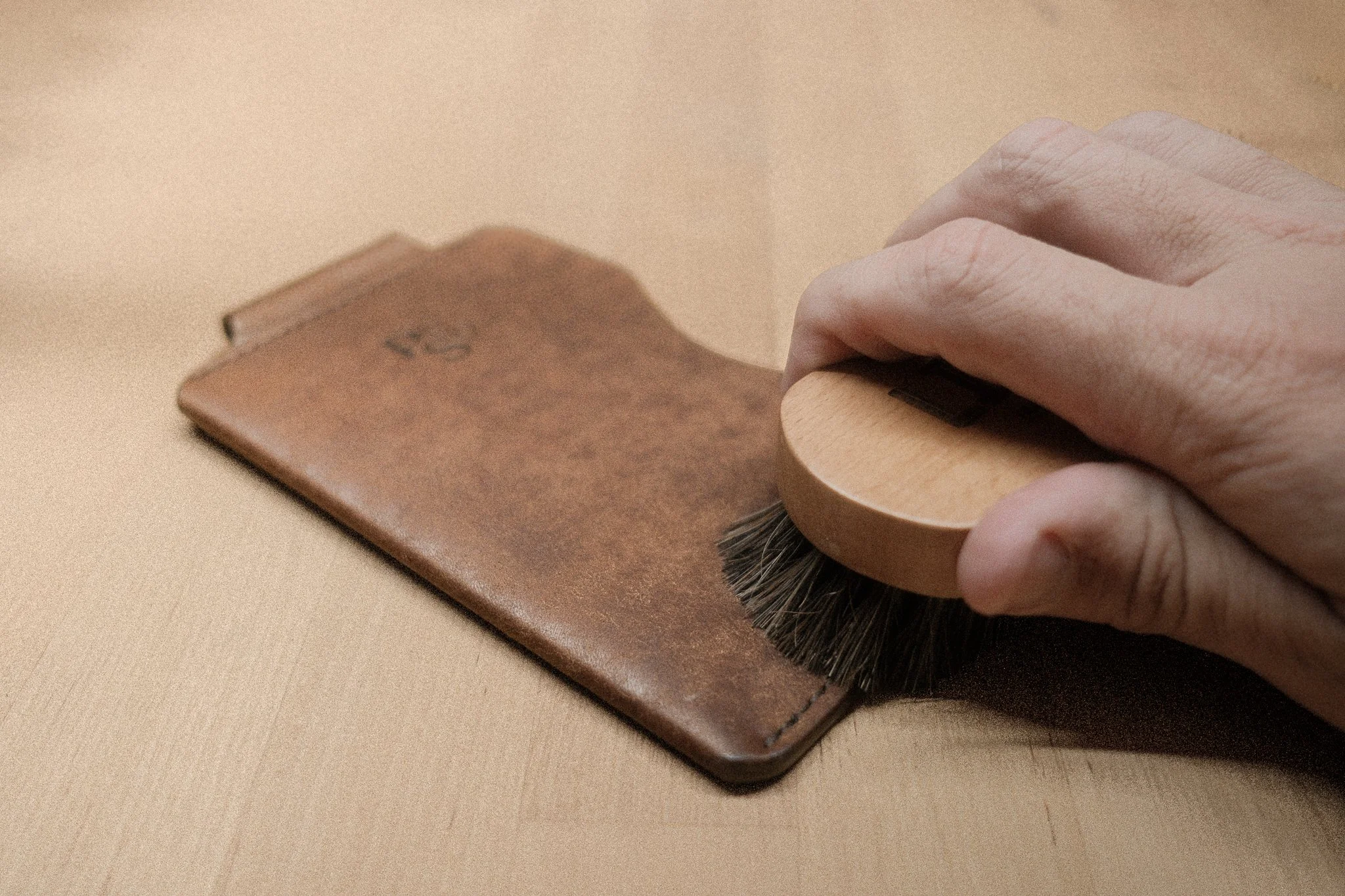
Vegetable-tanned leather doesn't stay the way you bought it, it gets better with age and use.That’s the beauty of patina.
The oil off your hands, the sun, the way you shove it in the same pocket every round. It all goes into the hide. A piece darkens, picks up a shine in the places you touch, and takes on a shape that's specific to you. Scratches don't sit on top of it, they become part of it. The hide is dyed all the way through, so a scratch shows the same color underneath and settles back in. Becoming memories of the rounds played and the walks taken on courses near and far.
Which means it’ll look better in a year than it did the day it showed up. That's not a marketing line, it's just what this material does. It's the entire reason I use it.
What's in the line
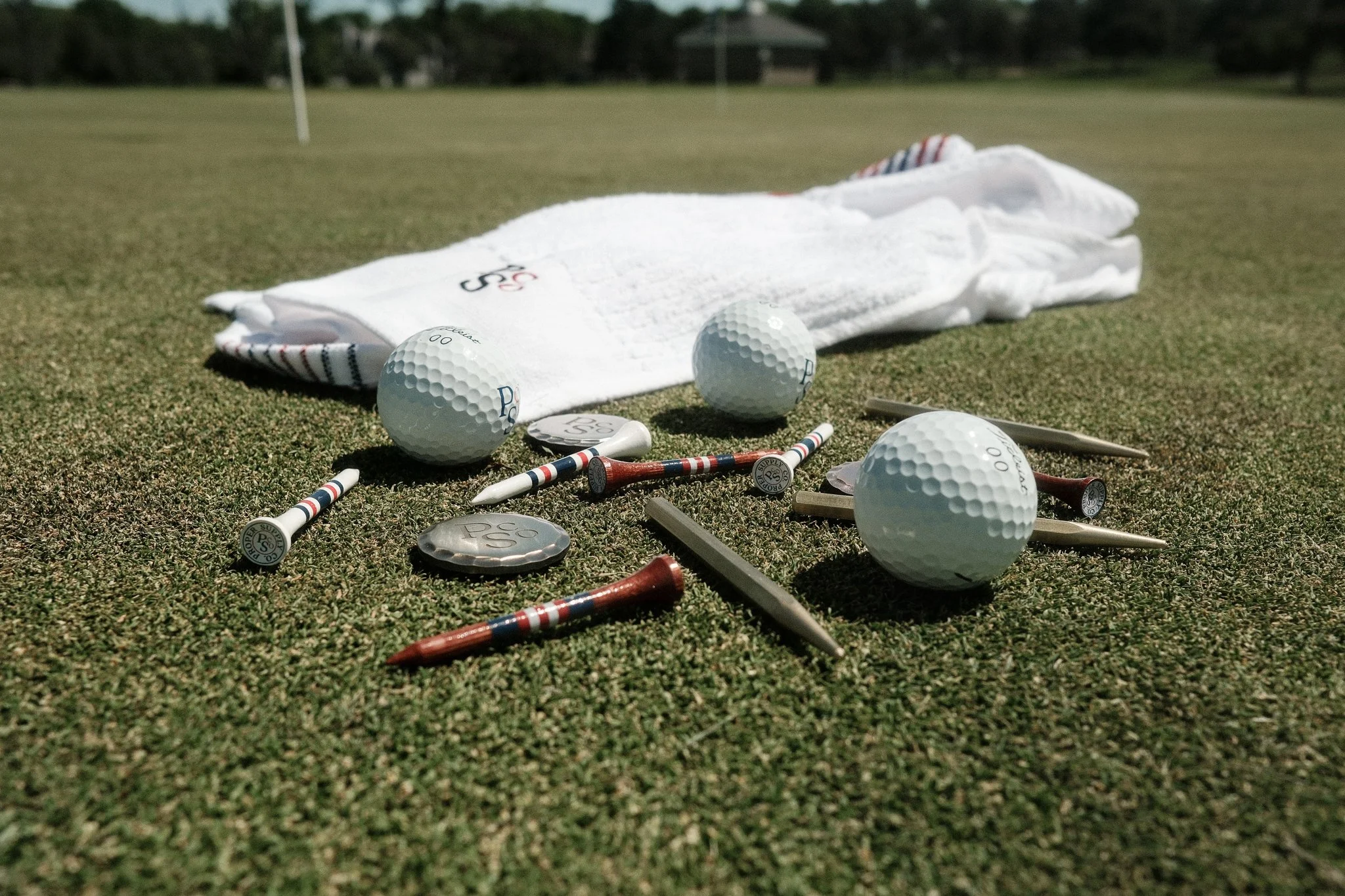
Scorecard holders, glove sleeves, card wallets, bag tags, ball markers, divot tools, sunglass straps and key lanyards. Things you reach for without thinking about it, on the course and off it. I wanted to make the stuff you use every round, in a way that pays you back for using it.
Nothing here is seasonal. There's no new collection coming. If I make something new it's because I needed it and couldn't find a decent one.
The name
Proper Supply. It's a deliberate and straightforward name by choice.
Everything I make is meant to earn a permanent spot in your bag rather than impress you once and then quietly fall apart. That's the whole premise, quality craftsmanship and never sacrificing on materials.
-Made to wear in, not out-